· Alp Burak Çatakoğlu · 7 min read
What Are MitraClip and TriClip?
MitraClip and TriClip are closed treatment methods applied through the inguinal vein in severe mitral or tricuspid valve insufficiency. Who it is suitable for, how it is done, its risks and follow-up process are in this guide.
Physician Approval: Prof. Dr. Alp Burak Çatakoğlu Last Update: 2026-02-05
What is MitraClip?
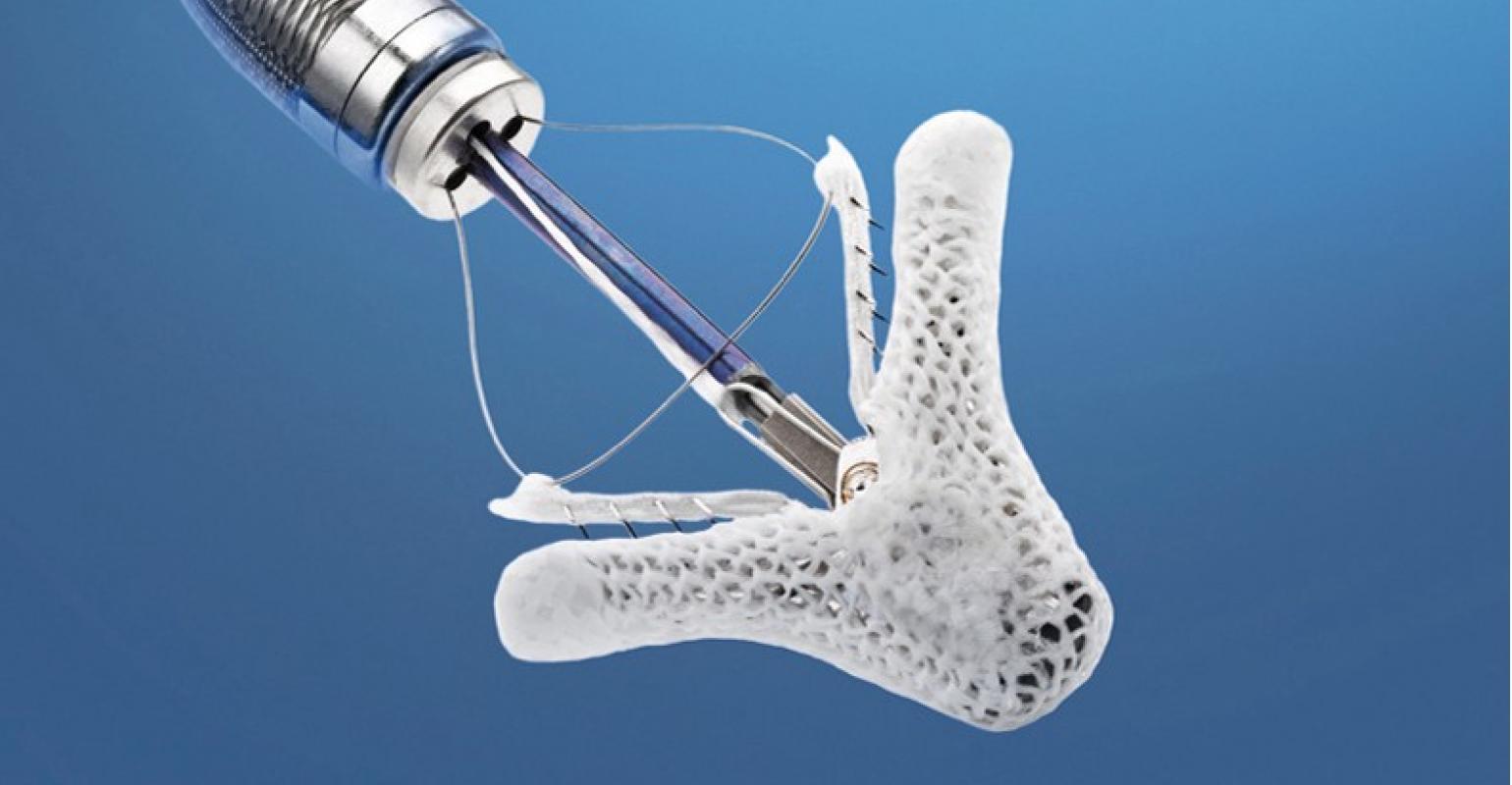
Short Answer: MitraClip is a closed treatment method that approximates the valve leaflets by entering through the inguinal vein in severe mitral insufficiency. It may be an alternative to open surgery in suitable patients and the recovery period is generally short. MitraClip procedure is a closed, minimally invasive treatment method applied to patients with severe mitral regurgitation, performed through the groin instead of open heart surgery. During the procedure, a clip (a device similar to a clothespin) reduces the degree of mitral insufficiency by bringing the mitral leaflets that are far away from each other closer. This procedure received FDA approval for degenerative mitral insufficiency in 2013 and for functional mitral insufficiency in 2018.
To whom is MitraClip applied?
MitraClip procedure can be applied to patients with severe mitral regurgitation. Before deciding on this procedure, mitral valve anatomy is evaluated in detail by echocardiography. It may also need to be examined with trans-esophageal echocardiography (endoscopy). Then, cardiology and cardiovascular surgery physicians hold a heart team meeting and a joint council decision is made for the MitraClip procedure.
MitraClip treatment may be considered if the following criteria are present:
- Advanced (≥3+) degenerative or functional mitral regurgitation
- Presence of symptoms
- EF value must be more than 20% and less than 50%
- STS risk score more than 6%
- The aorta has a very calcified structure
- Unsuitable rib cage anatomy
- The patient is frail or debilitated
- Liver failure
- Severe pulmonary hypertension
- Presence of accompanying problems such as right heart failure, tricuspid valve insufficiency, chemotherapy
Who cannot undergo MitraClip procedure?
- Active inflammation of the heart valves
- Rheumatic mitral valve insufficiency
- Clot inside the heart
Apart from these criteria, there is no obstacle to performing MitraClip.
How is the MitraClip procedure done?
You will be admitted to the hospital early in the morning of the procedure day. After your nurse makes the preparations, you will meet with the anesthesiologist. You can ask your interventional cardiologist who will perform the procedure any questions you may have before the procedure.
The procedure will be performed in the angiography and cardiac catheterization laboratory. Your doctor will perform this procedure using one of the general anesthesia or sedation methods. Local anesthesia will be applied to the groin area. After sleeping, an ultrasound probe will be inserted into the esophagus via endoscopic method for trans-esophageal echocardiography (TEE). Thanks to this device, your mitral valve will be visualized in 3D and the clip will be placed properly.
The right cavity of the heart is reached with the help of a catheter using the femoral vein, which is a large vein in the groin. A small hole is made to pass from the right heart to the left. This is called atrial septostomy. This hole will close spontaneously in a short time after the procedure. Through this hole, the MitraClip catheter is positioned in the left heart. It is controlled from the screen and the clip is placed in the right place by looking at the 3D ECO images. If the mitral insufficiency has decreased to a mild level in the ECHO controls, all catheters inside are removed. Thus, the only thing left inside the heart is the clip part of MitraClip.
Bleeding is stopped by applying light compression to the groin area and covered with a bandage. It is recommended to leave this leg immobile for a few hours.
You will be monitored with monitors in the intensive care unit overnight. The next day you will be moved to a normal room. You will be asked to stand up and return to normal routine. After 2-3 days of follow-up under room conditions, the patient will be discharged home. Your medications will be arranged and your check-up date will be determined. Usually, your doctor who performed the procedure will call you for a check-up after 1 week or 1 month.
What are the risks of the MitraClip procedure?
The following complications may occur during or in the first hours of the procedure:
- Stroke
- Bleeding in the groin
- Death
- Bleeding between the pericardium
- Rhythm irregularity
- Kidney failure
The complications mentioned above are issues for which an experienced cardiologist is aware and prepared. It has been observed in various studies that the probability of each occurring is less than 1%. Generally, in experienced centers, a cardiovascular surgeon is on standby throughout the procedure to intervene if necessary.
What is mitral regurgitation?
Mitral valve is one of the 4 important valves of the heart. It is located between the atrium and ventricle on the left side of the heart, and its main function is to ensure unidirectional blood flow. However, in some cases, the valve loses its function and blood begins to flow in both directions. This is called mitral regurgitation or mitral valve leak. It is classified as mild, moderate and severe. Cardiologists also give a score between 1 and 4. 1 means mild leakage, 4 means severe leakage.
How many types of mitral regurgitation are there?
Mitral insufficiency occurs in two different forms:
- Functional mitral regurgitation
- Degenerative mitral regurgitation
Functional mitral insufficiency is the name given to mitral insufficiency that develops with the enlargement of the left ventricle (ventricle) along with heart failure and the resulting deterioration of the mitral valve anatomy. In degenerative mitral insufficiency, mitral insufficiency occurs with the degeneration of the valves that form the mitral valve or the muscle fibers called chordae that enable the movement of these valves. The mitral valve may be michamatous or the anatomy and function of the valve and chordae may be impaired due to fibroelastic insufficiency.

Figure 1: In this illustration you see the normal mitral valve and different types of mitral regurgitation
What is the best treatment for mitral regurgitation?
When mitral insufficiency reaches advanced levels, there are two types of treatment methods:
- Mitral valve repair surgery (Open heart surgery)
- MitraClip method (Closed method)
The most preferred method in mitral insufficiency is repair of the mitral valve with open heart surgery. A cardiovascular surgeon performs this operation. It is performed under general anesthesia, usually by opening the rib cage. In some cases, surgeons can perform this surgery minimally-invasively, that is, through smaller holes. If leakage continues in the valve repaired during surgery, a new valve can be inserted. Metal covers are generally preferred.
MitraClip is a closed treatment method performed by entering the artery called the femoral artery in the groin. No intervention is made to the rib cage.
Successful results have been obtained with both methods in current studies. MitraClip results have shown similar results to surgery in studies on both degenerative and functional mitral regurgitation. The MitraClip method received FDA approval in 2013 for degenerative mitral regurgitation and in 2018 for functional mitral regurgitation.

Figure 2. In this illustration, the moment when the clip is placed on the mitral valve is shown, through the catheter that reaches the right side of the heart from the right groin vein, and then opens a hole and reaches the left side of the heart.
How does the MitraClip price vary?
MitraClip price; It varies depending on valve anatomy, number of clips to be used, need for additional intervention, anesthesia plan and hospital infrastructure. The most accurate evaluation is made individually after detailed echocardiography and clinical examination.
How should the doctor and center be chosen for MitraClip?
Instead of a single criterion in selection; The team’s MitraClip experience, 3D TEE imaging infrastructure, heart team approach, complication management and post-procedure follow-up plan should be evaluated together.
Frequently Asked Questions
What is MitraClip? MitraClip is an interventional treatment applied with a closed method in advanced mitral regurgitation.
For whom is MitraClip applied? It is evaluated in patients with advanced mitral regurgitation and high surgical risk.
How is MitraClip done? The heart is reached with a catheter from the inguinal vein and the clip is placed to bring the mitral leaflets closer.
How long does the process take? Although it varies depending on the case characteristics, it usually lasts a short time.
What are the risks of the MitraClip procedure? Rare complications such as stroke, bleeding and arrhythmia may occur.
How to control after MitraClip? Controls and medication plan are determined by your physician.
How does the MitraClip price vary? MitraClip price; It varies depending on valve anatomy, number of clips, need for additional intervention and hospital conditions.
What should I pay attention to when choosing a doctor and center for MitraClip? The experience of the team, advanced imaging infrastructure, heart team approach and regular follow-up plan should be evaluated together.