· Alp Burak Çatakoğlu · 7 min read
What Is Carotid Artery Stenting?
Carotid stenting is a closed treatment method used to increase blood flow to the brain in cases of severe stenosis in the carotid artery. To whom it is applied, its risks and follow-up process are in this guide.
Physician Approval: Prof. Dr. Alp Burak Çatakoğlu Last Update: 2026-02-05
What is carotid stenting?
Short Answer: Carotid stenting is the process of opening the severe stenosis in the carotid artery with a catheter and stent. It may be an alternative or complementary option to surgery to reduce the risk of stroke in suitable patients.
Carotid angioplasty and stenting is a minimally invasive procedure used to restore blood flow to your brain. These methods are generally applied to prevent paralysis.
The carotid arteries are the main arteries on both sides of the neck that carry blood to the brain. Plaques made of fat and other tissue can narrow these vessels and reduce blood flow to the brain. This condition is called carotid artery disease and can lead to stroke.
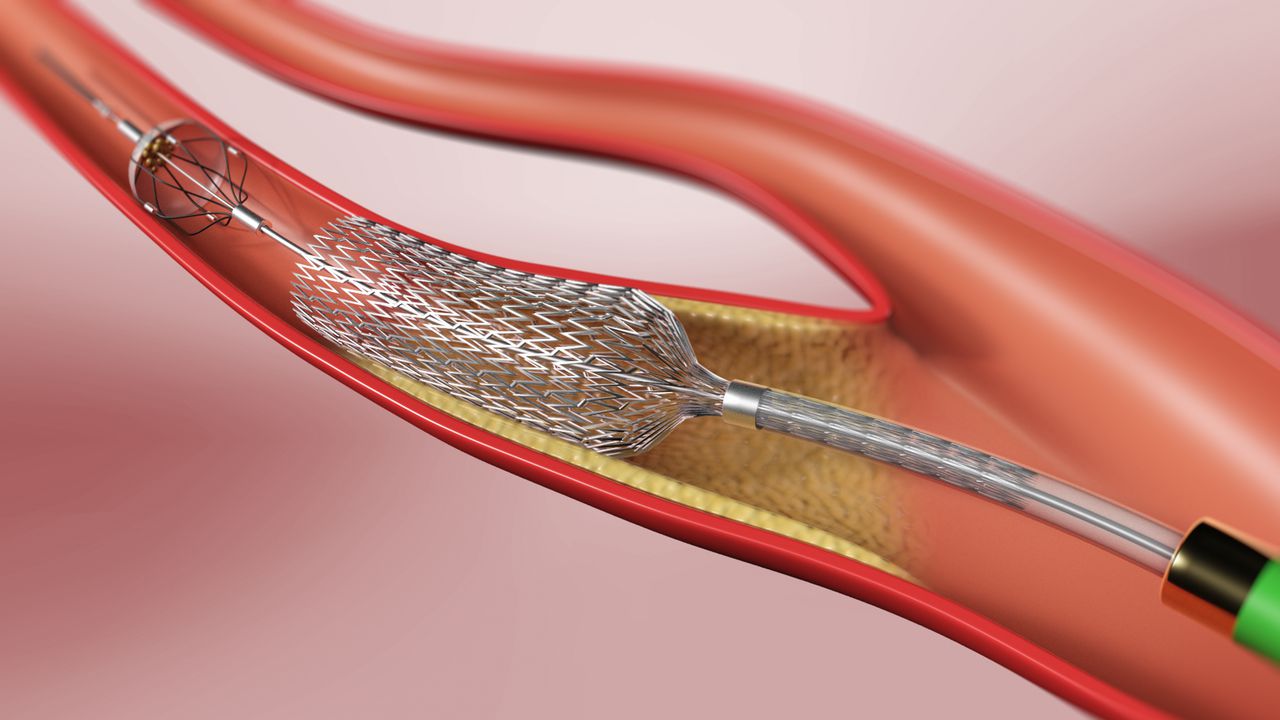
During the procedure, a stent is placed inside the blocked artery. Thus, the vein is widened and blood flow can freely reach your brain.
Why is carotid angioplasty performed?
Carotid angioplasty and stenting is performed in the following situations:
- If you have a 70% or more blockage in the carotid artery, especially if you have had a stroke or experienced symptoms that lead to a stroke
- If you have previously had a carotid endarterectomy and are experiencing new narrowings (restenosis) after surgery
- If the location of the narrowing (stenosis) is difficult to access with endarterectomy
In studies, the results of surgical endarterectomy and carotid stenting were similar in terms of success and safety. We recommend that you talk to your doctor about which procedure is safest for you.
Is carotid stenting risky?
As with any medical procedure, complications may occur. Some potential complications of carotid angioplasty and stenting include:
- Blood clot (transient ischemic attack, TIA): Blood clots that may form during angioplasty can break off and go to your brain. To reduce this risk, blood thinning medications will be given during the procedure.
- Re-narrowing of the stent (restenosis): There is a risk of narrowing of the artery again after carotid stent. To reduce this risk, taking your post-procedure medications regularly and following healthy lifestyle rules will reduce the risk of restenosis.
- Bleeding: There may be bleeding or bruising at the insertion site of the catheters. Remaining motionless in the groin area for a few hours after the procedure will reduce the risk of bleeding.
Preparation
Before stent, your doctor reviews your health history and performs a physical examination. He or she may also recommend one or more of the following tests:
- Ultrasound and Doppler: Carotid arteries are visualized with sound waves. Blood flow rate is measured in narrowed areas.
- Magnetic Resonance Angiography (MRA) or Computed Tomography Angiography (CTA): These examinations provide detailed images of blood vessels. While MRA uses radio frequency waves in a magnetic field, CTA uses X-rays with contrast material.
- Carotid Angiography: Contrast material is administered to the carotid artery through a catheter and the vessels are visualized.
Nutrition and medicines
Instructions on pre-stent nutrition will be given.
Night before procedure:
- Follow your doctor’s instructions about adjusting your current medications. Your doctor may want you to stop using certain medications, especially some diabetes medications, nonsteroidal anti-inflammatory drugs (NSAIDs), or blood thinners. Generally, continuing blood thinners will increase the success of the procedure.
- Drink the medicines to be taken in the morning with little water.
- Arrange transportation back home. You will need to stay in the hospital overnight after the stent, and you may not be able to drive the next day due to sedative medications.
What to expect
Carotid stenting is not considered a surgical procedure because it is less invasive than surgery. It can be done with only a small catheter inserted into your body.
It is mostly performed with local anesthesia. The patient remains awake. If necessary, you will be relieved with sedative medications.
Before processing
- You will be taken to the angiography room and asked to lie on a procedure bed. You will be kept comfortable and stable by placing your head on a support while images of the carotid artery are taken.
- Your groin is shaved and prepared with antiseptic solution, and a sterile drape is placed over your body.
- Local anesthetic is injected into your groin.
- Small electrodes are placed on your chest to monitor your heart rate and rhythm.
During operation
- Carotid angioplasty and stenting: Your doctor usually starts the procedure by entering the femoral artery in the groin area with a soft catheter. The process steps are as follows:
- A flexible catheter is inserted into the artery in the groin. A soft catheter long enough to reach the jugular vein is guided to the narrowed area under X-ray guidance. You will not feel pain throughout the procedure.
- Contrast material is injected into the carotid artery via the catheter. The contrast material may cause a temporary feeling of warmth on your face. This article shows in detail the narrowed artery and blood flow to the brain.
- A filter is placed inside the vein. This filter is placed to catch small pieces that may break away from the narrowed area.
- By inflating the balloon, the plaque is pushed to the side and the vessel is widened.
- A small metal mesh tube (stent) is placed in the enlarged vein, which expands on its own and takes the shape of the vein. The placed stent helps prevent the artery from narrowing again.
- The filter, catheters and stent carrying system are removed. Bleeding is stopped by placing a gel closure device at the entrance site in the groin or by manual compression.
- After the procedure is completed, you should lie down calmly for a few hours. No stitches are needed, a small bandage is sufficient. You will then be taken to the recovery area or to your room.
Post-processing
You must lie still in your room for a few hours to prevent bleeding from the catheter entry site. Patients are usually discharged the next day in the morning.
The catheter site may remain tender, slightly swollen and bruised for a few days. There may be a slight discoloration or a small swelling at the puncture site. Your doctor may recommend you a pain-relieving tablet.
You may need to avoid intense physical activities and heavy lifting for 24 hours after the procedure. You can return to your normal routine the next day.
How does the carotid stent price vary?
Carotid stent price; It varies depending on the anatomy of the stenosis, the stent and protection systems to be used, the need for additional intervention and center conditions. The most accurate planning is done with pre-procedural examination.
How should the doctor and center be chosen for carotid stent?
Procedural experience, neurological complication management, stroke team access, imaging infrastructure and post-procedure medication/follow-up protocol should be evaluated together in selection.
Frequently Asked Questions
What is a carotid stent? Carotid stent is the process of opening the stenosis in the carotid artery with a stent.
To whom does it apply? The physician decides according to the degree of stenosis and risk status.
How to process? The target vessel is reached with a catheter through the femoral artery in the groin, and a stent is placed.
How long is the processing time? Usually lasts a short time; May vary depending on technical difficulty.
What is the length of hospital stay? Short-term hospitalization is sufficient for most patients.
What should be taken into consideration after the procedure? Medications and controls are planned according to the doctor’s recommendation.
How does the carotid stent price vary? Carotid stent price; It varies depending on the nature of the stenosis, the equipment used, additional interventions and hospital conditions.
What should I pay attention to when choosing a doctor and center for carotid stent? Team experience, stroke management infrastructure, imaging quality and regular follow-up plan should be evaluated together.